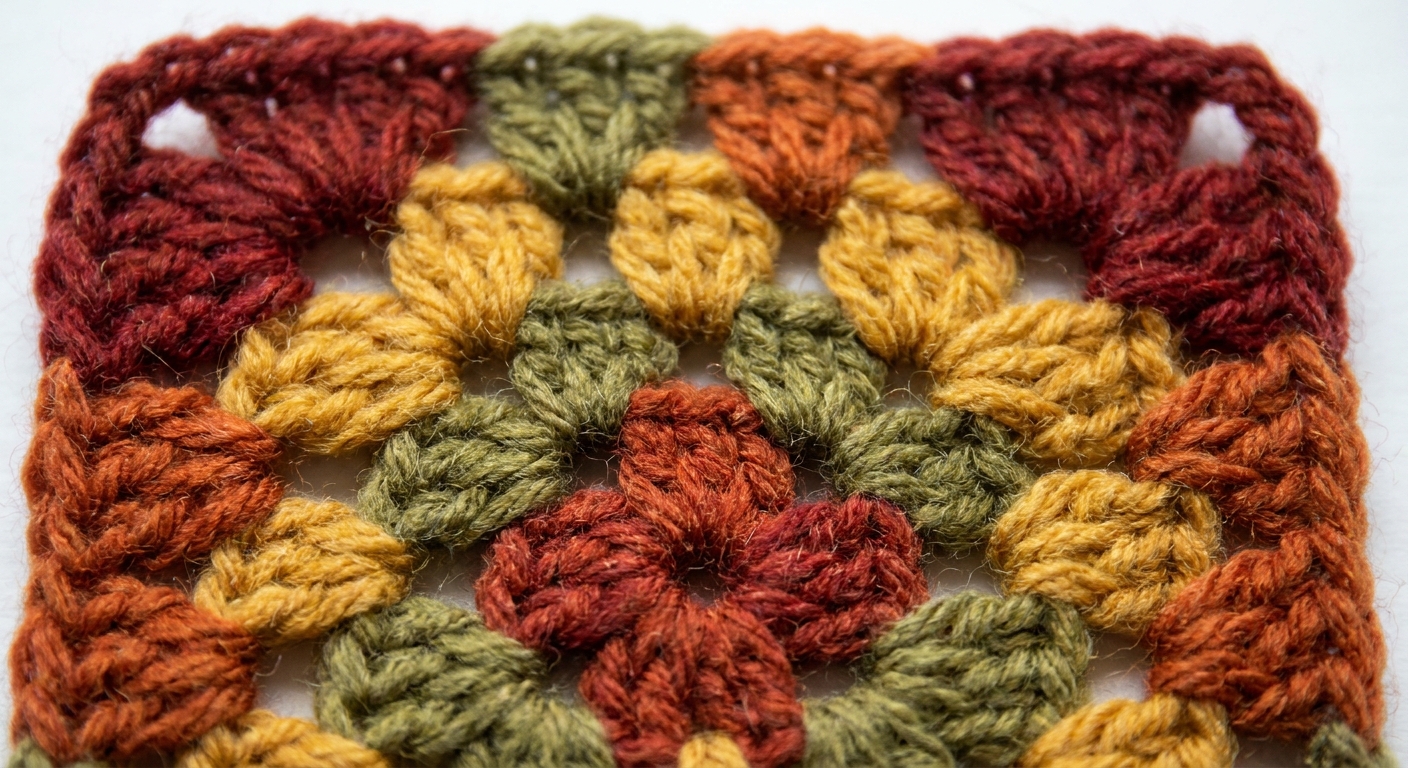
A cozy, beginner-friendly granny square lesson: yarn holding, stitch counting, clean corners, fasten-off, and an easy way to join two squares.
Small paws. Big project plans.
If a crochet pattern looks like secret code, you are not alone. The good news is most patterns are built from the same handful of abbreviations and a few repeat symbols. Once you learn how to read one “busy” line, you can follow almost any beginner friendly design without hunting for a video.
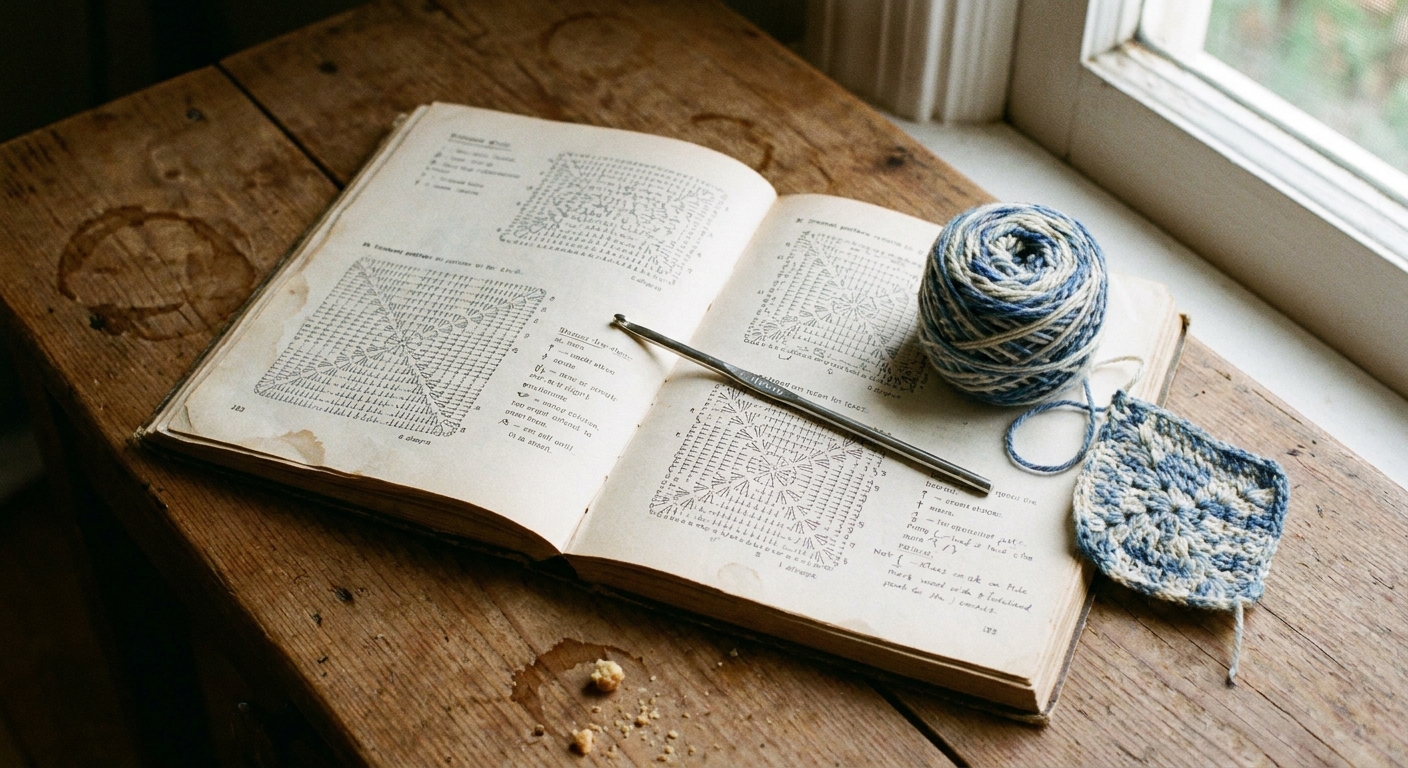
Before row 1: the three lines that matter
Most patterns start with a tiny block of info that feels skippable. It is actually your map. Look for these items before you chain anything.
Yarn weight
This tells you how thick the yarn should be. You might see words like worsted, DK, bulky, or a number like #4. Using a very different weight changes the finished size and drape. If you want the project to match the pattern’s size, start by matching the yarn weight.
Hook size
This is the hook the designer used to get their fabric and gauge. Crochet is flexible, so think of hook size as a starting point, not a rule. If your stitches look tight and stiff, you may need a larger hook. If they look loose and holey (and the pattern does not want lace), you may need a smaller hook.
Gauge
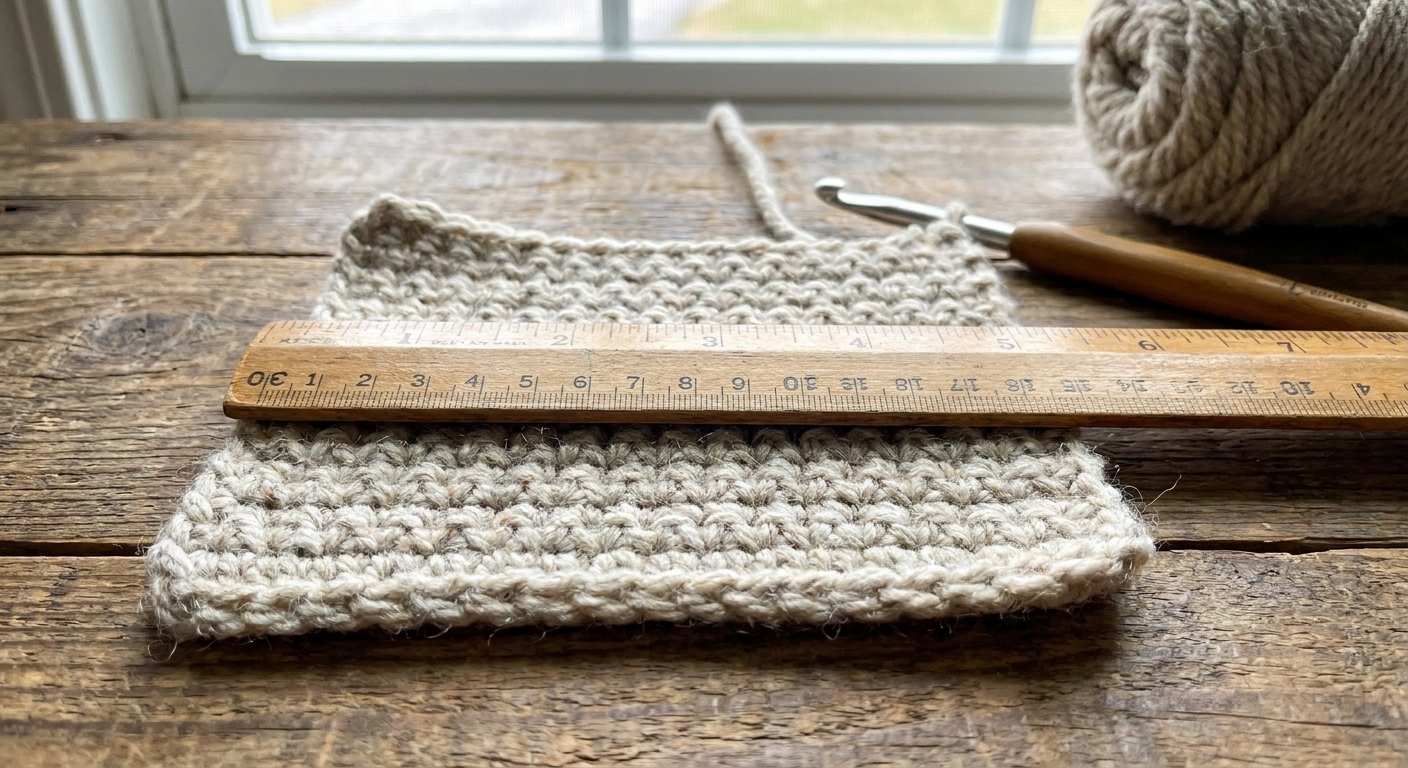
Gauge is a measurement of how many stitches and rows fit in a set area, usually 4 in x 4 in (10 cm x 10 cm). A gauge line often looks like this:
Gauge: 16 sc and 18 rows = 4 in (10 cm)
- 16 sc means 16 single crochet stitches across.
- 18 rows means 18 rows tall.
- = 4 in means that block should measure 4 inches when made with the recommended yarn and hook.
When should you actually swatch? If fit or size matters (hats, garments, anything meant to match measurements), gauge is worth the few minutes. If it is a blanket, coaster, or freeform project, you can often treat gauge as “texture guidance” and relax a bit.
The abbreviations you meet first
Patterns use abbreviations to keep lines short. Here are the ones you will see early and often.
- ch = chain. The foundation loops you make to begin, or chain stitches within a row.
- sc = single crochet.
- dc = double crochet.
- sl st = slip stitch. Used to join rounds, move to a new spot, or finish neatly.
- inc = increase. Most commonly “2 stitches in the same stitch” (for example, 2 sc in one stitch).
- dec = decrease. Most commonly turning 2 stitches into 1 (for example, sc2tog). Different patterns may specify the exact decrease they want.
Quick note about US vs UK terms: Many online patterns use US terms. In UK terms, stitches have different names (for example, UK “dc” is not US “dc”). A pattern will usually say which terminology it uses near the top. If it does not, check the designer’s site for a note before you start.
Decode one typical pattern line (step by step)
Let’s take a common beginner style line and translate it into plain English. You might see something like:
Row 2: ch 1, sc in first st, *inc in next st, sc in next 2 sts* rep from * across, turn. (24)
What each chunk is telling you
- Row 2: You are working the second row (back and forth rows, not a round).
- ch 1 means chain one at the start of the row. This is the turning chain for single crochet in many patterns.
- sc in first st means single crochet into the first stitch of the previous row.
- * ... * (asterisks) wrap the part you repeat.
- inc in next st means work two stitches into the next stitch (often 2 sc in the same stitch, unless the pattern defines inc differently).
- sc in next 2 sts means make 1 single crochet in each of the next two stitches.
- rep from * across means keep repeating everything between the asterisks until you reach the end of the row.
- turn means flip your work so you can crochet back the other direction.
- (24) in parentheses at the end is the stitch count you should have when the row is complete.
If your stitch count does not match that number, stop and investigate right away. A small counting mistake in Row 2 becomes a big mystery by Row 12.
Brackets and parentheses
Designers use punctuation like crochet shorthand. The exact style varies, but these are common uses.
Parentheses ( )
- Stitch counts: (24) at the end of a row or round means you should have 24 stitches total.
- Grouped instructions: (sc, ch 1, sc) all in one stitch means work that whole group into the same stitch or space.
- Sizes: (S, M, L) or (1st size, 2nd size, 3rd size). You follow the number that matches your size.
Brackets [ ]
Brackets often show a set of stitches to repeat, especially when the designer is already using parentheses for stitch counts or sizes. Example:
Rnd 3: ch 1, [sc in next 3 sts, inc] rep around. (40)
Translation: do “sc in next 3, then increase” all the way around.
Curly braces { }
Less common, but sometimes used the same way as brackets for repeats. If you see them, look for a note at the top of the pattern explaining the symbol style.
Asterisk repeats
Asterisks tell you what to repeat. Here are the repeat phrases you will see:
- *...* rep from * to * across: repeat the starred section until the end of the row.
- *...* rep from * to last 2 sts: repeat the starred section, but stop with a specific number of stitches left unworked.
- rep 6 times: repeat the section exactly that many times (common in rounds).
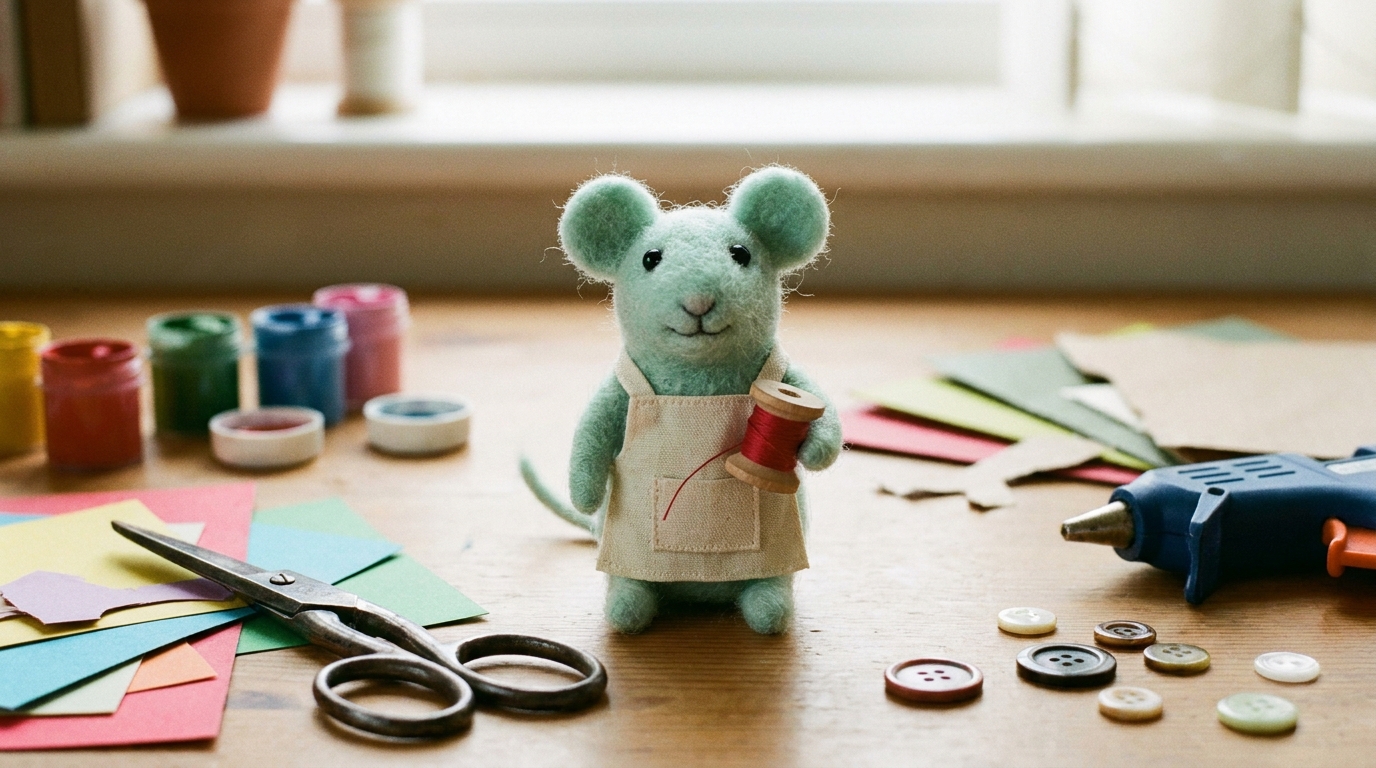
Tip from a tiny felt mouse: when repeats get long, it helps to whisper the repeat out loud as you crochet. Not forever. Just until your paws, er, hands, find the rhythm.
Turning chains
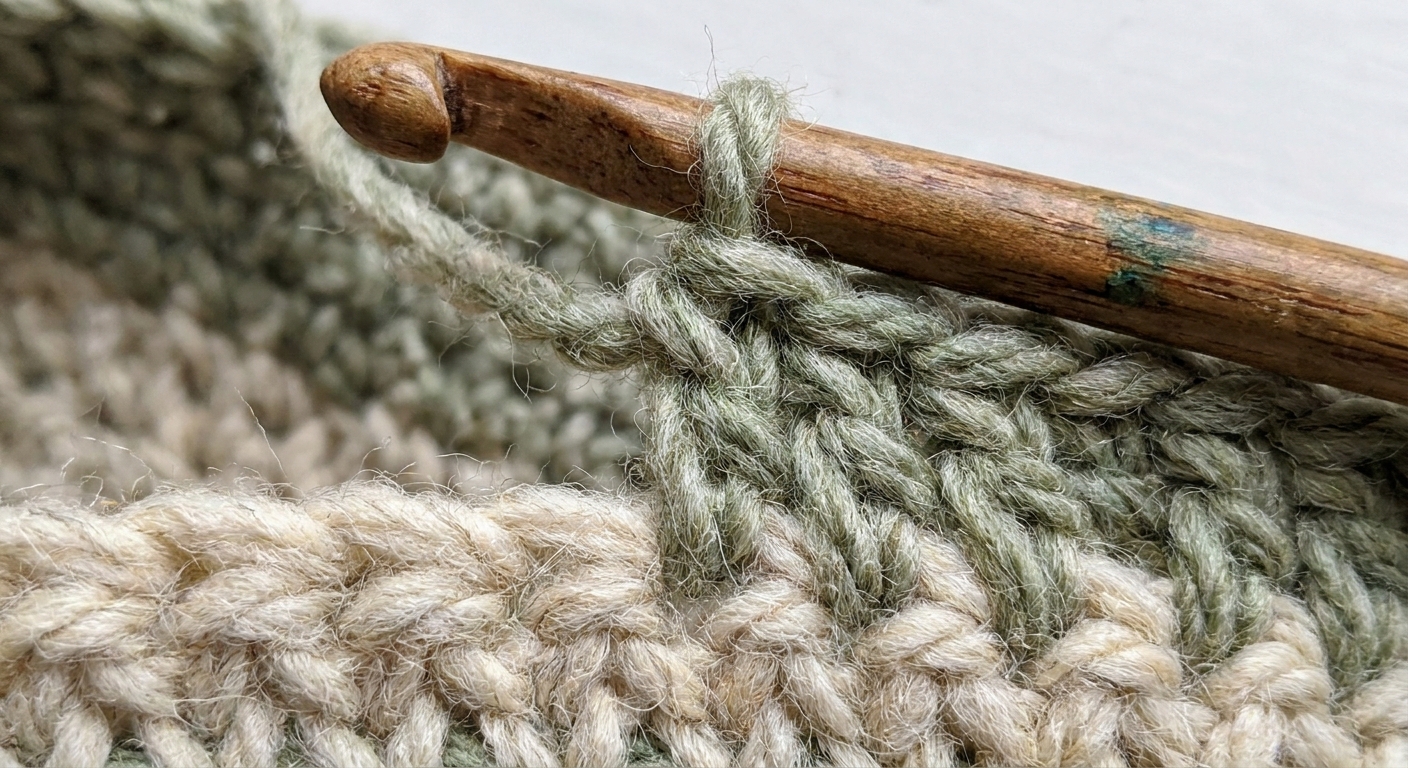
At the beginning of a row, patterns often tell you to chain before you start the first stitch. That chain helps your row reach the right height.
- For sc rows, many patterns use ch 1.
- For dc rows, many patterns use ch 2 or ch 3.
Two important details:
- Does the turning chain count as a stitch? Some patterns say it does, some say it does not. Look for a note like “ch-1 does not count as a st” or “beginning ch-3 counts as dc.” This changes where you place the last stitch of the row.
- Patterns may ask you to “sk first st” when the chain counts as a stitch, to keep the stitch count correct and prevent extra stitches.
Rounds vs rows
Patterns are usually worked either back and forth in rows or in the round.
Rows (flat)
- You will see Row 1, Row 2 and the word turn.
- At the end of each row, you flip the work.
Rounds (tubes and circles)
- You will see Rnd 1, Rnd 2.
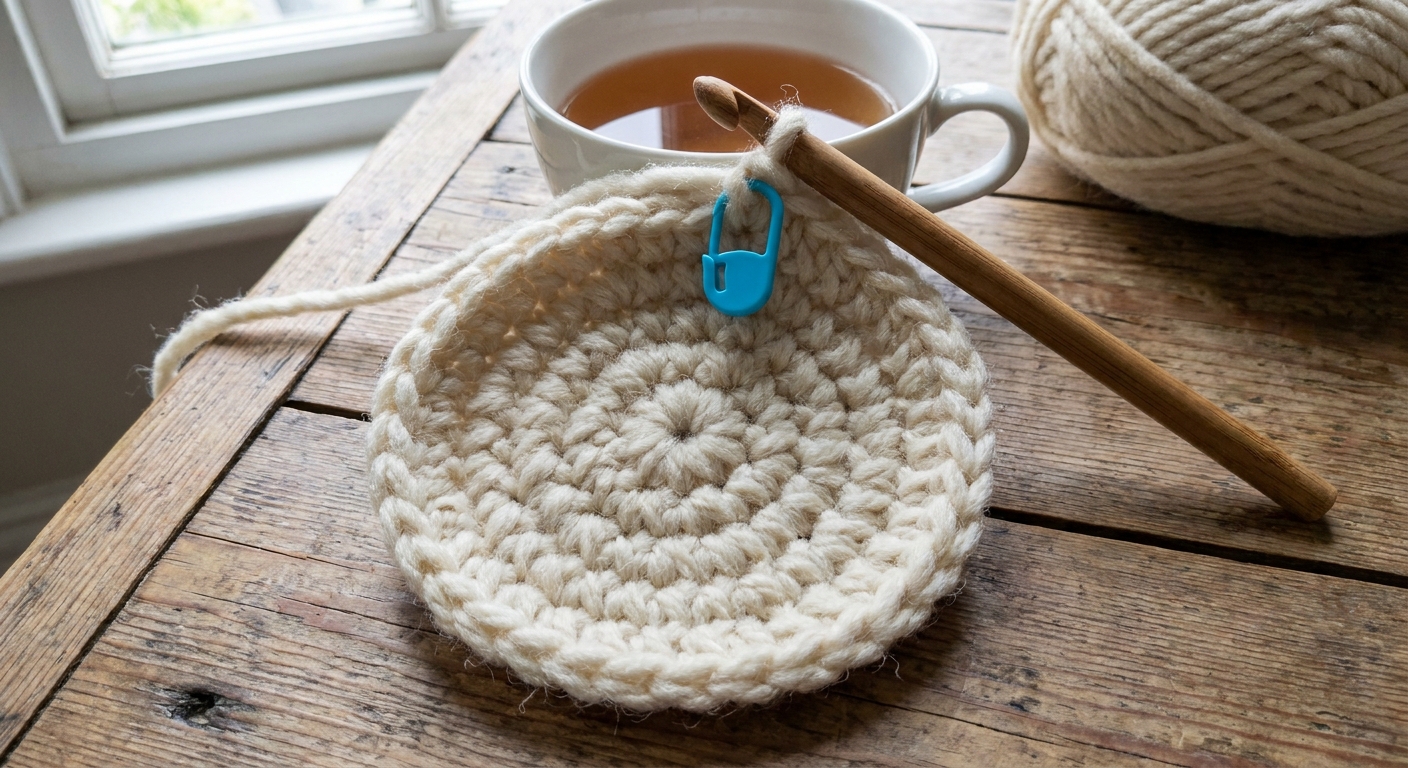
- You may join with sl st to close each round, or work in a spiral without joining.
- Look for instructions like “join,” “do not join,” or “place marker.”
If a pattern is worked in continuous rounds, a stitch marker is your best friend. Pop it into the first stitch of the round so you always know where the round begins.
How inc and dec show up
Some patterns use inc and dec, others spell them out.
Increase
You might see:
- inc
- 2 sc in next st
- 2 dc in same st
All of these mean “add stitches,” usually by putting two stitches into one spot.
Decrease
You might see:
- dec
- sc2tog (single crochet two together)
- dc2tog (double crochet two together)
These mean “combine stitches,” usually by turning two stitches into one. Some designers specify a particular method (like an invisible decrease). If the pattern calls for it, follow that method for the neatest look.
Common pattern notes
- “Work in BLO/FLO” means back loop only or front loop only. This changes texture and stretch.
- “In ch space” means crochet into the gap made by a chain, not into the chain loop itself.
- “Sk” means skip. For example, “sk next st” means do not crochet into the next stitch.
- “St(s)” means stitch or stitches.
- “Fasten off” means cut yarn and secure the tail.
Quick pattern checklist
- Find the terminology (US or UK).
- Check yarn weight and hook size.
- Read the gauge line and decide if you should swatch.
- Scan for notes like “turning chain counts as a stitch” or “join each round”.
- On every row or round, confirm the stitch count in parentheses if it is given.
Mini FAQ
Why does my stitch count keep growing at the edges?
This is often a turning chain issue. If the turning chain counts as a stitch and you also crochet into the first stitch, you can add stitches each row. Re-read the pattern’s note about whether the turning chain counts.
What if my yarn label does not match the pattern yarn?
Match the yarn weight first, then use the gauge line to confirm you are on track. You can crochet the same pattern with a different yarn, but your finished size will likely change unless you adjust hook size to meet gauge.
Do I have to follow the exact hook size in the pattern?
No. Use the hook size that helps you meet gauge (if gauge matters) and gives you a fabric you like. Your hands, your tension, your call.
The pattern says “sl st to join.” Where exactly do I slip stitch?
Usually into the first stitch of the round (or sometimes into the top of a beginning chain if that chain counts as a stitch). If it is unclear, look for a note in the first round that explains what counts as a stitch.