A beginner-friendly guide to acrylic pouring: how to mix paint and medium, plan colors, estimate paint amounts, and create beautiful dirty pours with trouble...
There is nothing that drains crafting joy faster than painting a simple project and watching the surface laugh right back through your third coat. If you are trying to keep your supplies budget-friendly (same), you do not need luxury paints for solid coverage. You just need the right kind of budget paint, the right colors in that line, and a couple of small technique tweaks that make inexpensive acrylics behave like they got promoted.
Below is my honest, practical ranking of affordable acrylic paint brands that in my experience cover well, with notes on where each one shines and where it can get a little streaky. A quick heads-up before we start: acrylic paint varies by product line, finish (matte vs satin), and even color within the same brand. I’m basing this on typical craft life testing and the sets and bottles I’ve used over time, not lab pigment-load data. Think: what I reach for when I want fewer coats and less frustration.
I’m focusing on three things that matter most for everyday DIY: opacity (coverage), blendability (how smoothly it layers and mixes), and color payoff (how rich it looks once dry).
How I judged coverage
I am not testing like a fine art lab here. I am testing like someone who has painted on everything from cereal boxes to thrifted frames and has watched a lot of beginners fight streaky paint.
When I say a paint “covers well,” I mean it can usually give solid color in 1 to 2 coats over a primed surface (white gesso, craft primer, or a light base coat), and 2 to 3 coats on raw wood depending on the color. Yellows, some oranges, and fluorescents are their own adventure and almost always need help.
- Opacity on common craft surfaces: raw wood, primed wood, canvas, thick cardstock, and pre-painted items (like a glossy thrift-store frame that has been scuff-sanded).
- Light-over-dark performance: can white, yellow, and pastels cover over darker colors without endless coats?
- Brushstrokes and leveling: does it dry with obvious ridges and streaks, or does it settle down nicely?
- Mixing strength: when you mix two colors, does it turn muddy fast or stay vibrant?
- Consistency and bottle-to-bottle reliability: because a “great deal” is not great if half the colors are watery.
Quick truth that saves money: Coverage depends on the specific pigment. Even the best budget line will have naturally more transparent shades. In general, many yellows, some reds (often quinacridone-type), and most fluorescents are more sheer. I’ll point out what tends to be easier (and what tends to be annoying) so you can shop smarter.
Best budget acrylics
“Budget” can mean different things depending on where you shop, so here’s the way I’m using it:
- Craft bottles (usually 2 oz): the classic low-cost pick for decor, signs, and big batches.
- Student and “affordable artist” acrylics (often 118 ml or similar tubes): more upfront cost, but often fewer coats and less fuss, so the value evens out fast if you paint a lot.
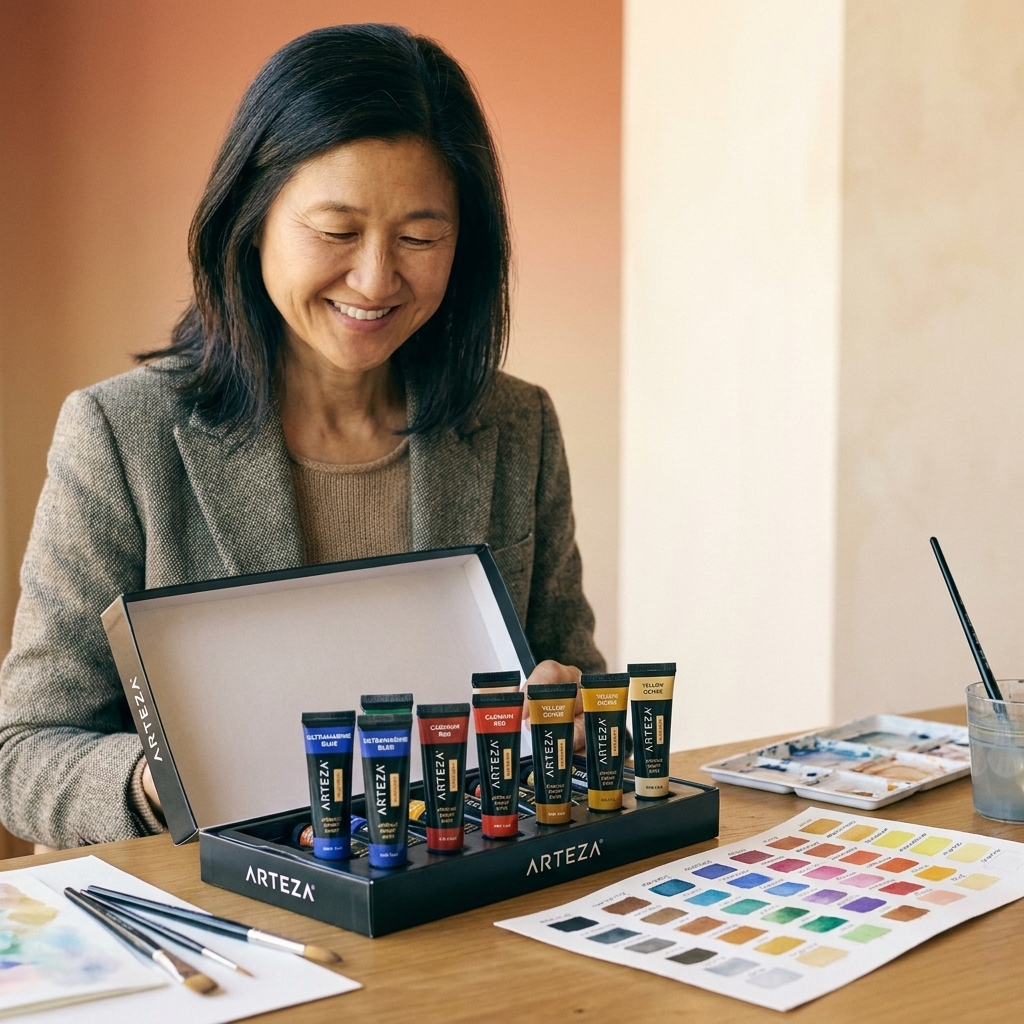
1) Arteza Acrylic Paint (Premium or Standard sets)
Best for: the strongest “upgrade tier” coverage and color payoff I’ve gotten from a budget-friendly set.
Arteza tends to hit the sweet spot for crafters who want paint that feels more like an artist acrylic, but still comes in affordable sets. The consistency is usually creamier than true bargain paints, which means fewer streaks and better coverage on primed surfaces.
- Opacity: Excellent overall, especially in earth tones, blacks, and many blues.
- Blendability: Smooth, mixes cleanly, and layers well without getting chalky too fast.
- Color payoff: Bold and saturated once dry.
- Watch-outs: Lighter colors still do better over primer. And like any line, color-to-color opacity varies.
My buy advice: If you can swing one nicer budget brand, make it this (or Liquitex BASICS). It’s forgiving when you are learning to control water and brush load. If you see separate Arteza acrylic ranges available where you shop, stick with sets labeled clearly as acrylic (not gouache) and consider starting with a smaller set first to see if you like the feel.
Budget note: Arteza sets can be a better deal per color than buying individual bottles, especially if you use lots of shades for seasonal decor.
2) Liquitex BASICS Acrylic
Best for: dependable coverage and clean mixing, especially if you paint a lot of backgrounds.
Liquitex BASICS is often the point where people realize they do not have to fight their paint. It’s thicker and often feels more pigmented than many craft-store bargain bottles, so it typically covers in fewer coats in normal use. It is not always the cheapest upfront, but the cost per usable coat is very friendly.
- Opacity: Very strong for the price, especially titanium white, mars black, and many neutrals.
- Blendability: Great for wet blending and soft gradients if you work in sections.
- Color payoff: Clean and consistent from color to color.
- Watch-outs: Tubes, not flip-top bottles. If you love squeeze bottles, you can decant into a reusable bottle or use a palette with a lid.
My buy advice: Grab a small set plus a big tube of titanium white. White is the color most budget painters burn through fastest.
Budget note: If you paint a lot, the larger tubes can end up cheaper per ounce than constantly replacing small craft bottles.
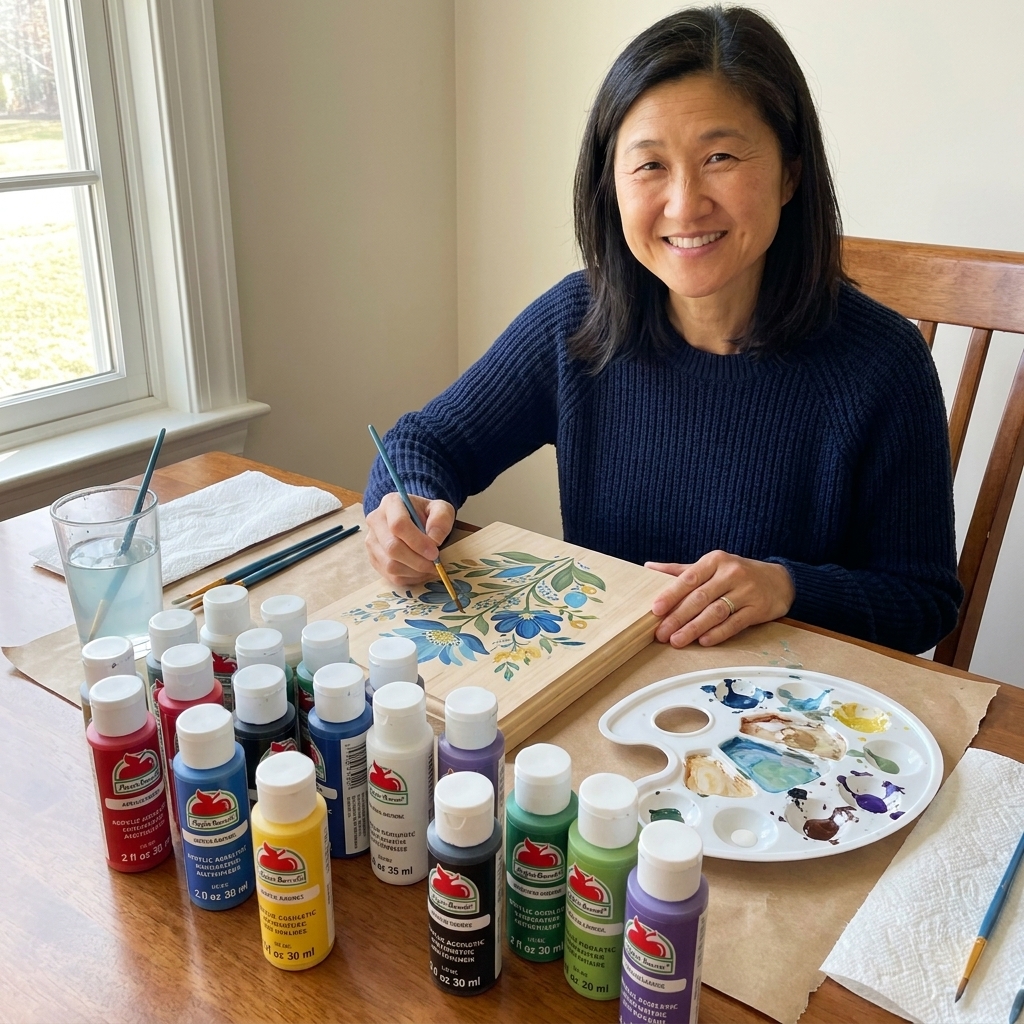
3) Apple Barrel (Plaid)
Best for: affordable all-purpose craft painting with genuinely solid coverage in the right shades.
Apple Barrel is a classic for a reason. It’s widely available, inexpensive, and easy to use for signs, seasonal decor, kids crafts, and quick DIYs. Coverage is often very good in medium to dark colors and many “country” style shades like barn red, sage green, warm gray, and deep navy.
- Opacity: Good to very good depending on the color. Dark greens, navies, browns, and blacks do well.
- Blendability: Decent, but it can dry a bit fast and grabby. Work in smaller areas or mist your palette lightly.
- Color payoff: Strong for craft paint, especially in matte finishes.
- Watch-outs: Whites and some brights can get streaky. Yellow is often the troublemaker, as usual.
My buy advice: Use Apple Barrel for base coats, backgrounds, and blocky shapes. For ultra-smooth gradients or portrait-style blending, step up to BASICS or Arteza.
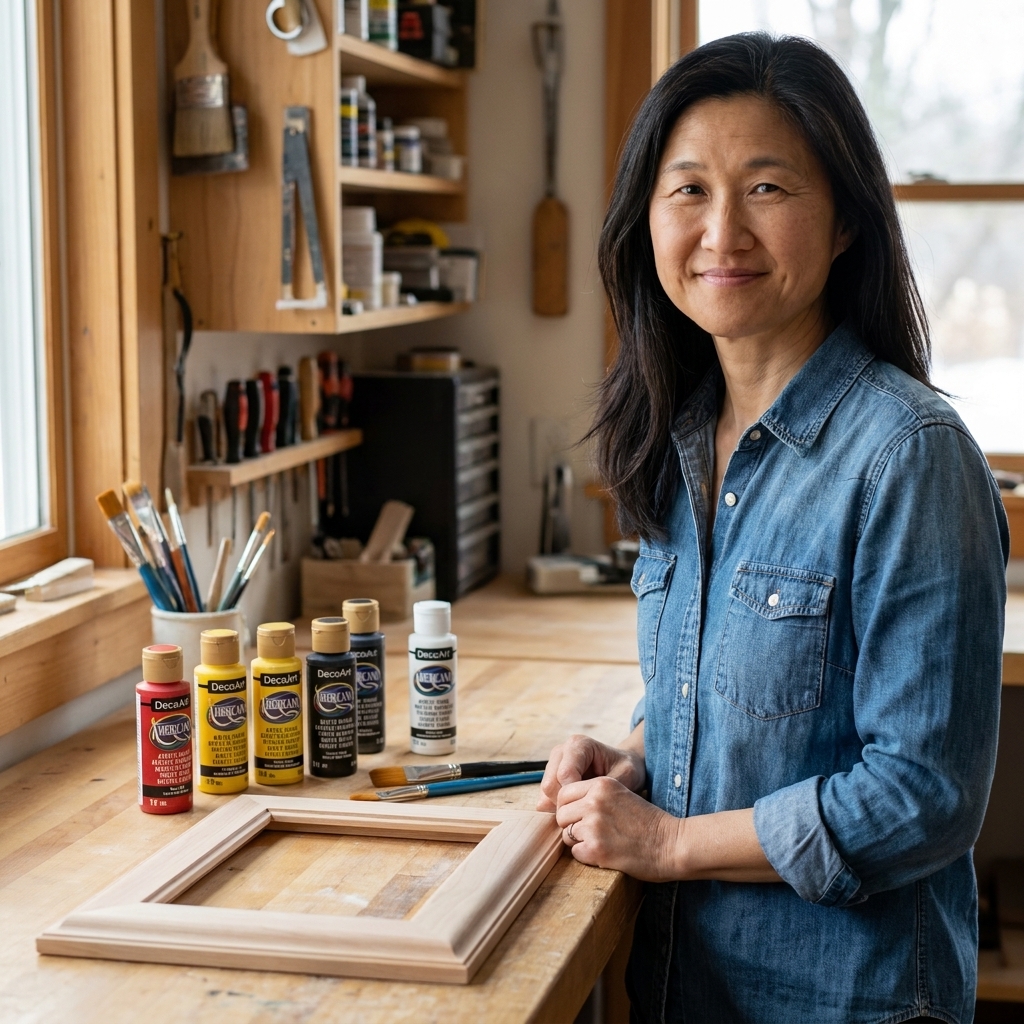
4) DecoArt Americana
Best for: smooth brushing and reliable results on home decor projects.
Americana is one of my favorite “teacher stash” paints because it behaves predictably. It tends to level nicely, which helps your finished piece look cleaner without fancy brushes.
- Opacity: Good overall, with many colors covering well in two coats on prepped surfaces.
- Blendability: Smooth and friendly for beginners.
- Color payoff: Nicely pigmented, especially in muted and vintage-style palettes.
- Watch-outs: Like most craft paints, pale colors want a light base underneath.
My buy advice: If you paint a lot of thrift flips (frames, wood decor, small furniture accents), Americana is a dependable workhorse.
5) FolkArt Acrylic (Plaid)
Best for: decorative painting and specialty finishes while staying budget-conscious.
FolkArt sits in a similar world as Apple Barrel, but I find it often feels a touch creamier in many colors. It is also easy to find in fun specialty finishes, which can save money because you do not need extra topcoats to get a specific look.
- Opacity: Good, especially in mid-tone colors.
- Blendability: Fine for basic blending and layering.
- Color payoff: Strong, with lots of attractive shades.
- Watch-outs: Some finishes are intentionally more sheer. That is not “bad coverage,” it is just the product doing its thing.
My buy advice: Great for signs, ornaments, and anything that benefits from a decorative finish. If you need maximum coverage in minimal coats, pick stronger pigments in the line and use primer.
6) Artist’s Loft (Michaels) Acrylic
Best for: ultra-tight budgets, classroom-style crafting, and practice pieces.
Artist’s Loft can be a smart buy when you are painting a lot and perfection is not the goal. Some colors surprise me in a good way, but consistency can vary by set and color family.
- Opacity: Mixed. Darker colors usually cover fine, lights can struggle.
- Blendability: Can feel a bit thin unless you use less water and load your brush well.
- Color payoff: Okay, but can look slightly chalky if overworked.
- Watch-outs: If you are frustrated by streaking, do not blame yourself. Try primer, or reserve this for base coats and kid crafts.
My buy advice: Use it for underpainting, big background areas, and experiments. Pair it with one better white and one better black to make the whole set feel more usable.
Coverage hacks
If you only take one thing from this article, let it be this: most coverage problems are surface prep problems. The second most common is “too much water.” Here is what I do when I want budget paint to behave.
Prep checklist
- Clean: wipe off dust and oils (especially thrifted decor and anything handled a lot).
- Scuff-sand glossy surfaces: you want a light tooth for paint to grip.
- Prime: gesso or a craft primer for wood and slick surfaces.
Prime first
Raw wood drinks paint like it is dehydrated. One quick coat of white gesso or a craft primer turns that thirsty wood into a smooth painting surface. You will use less paint overall and get cleaner color.
Use a light base for bright colors
Trying to cover black with yellow is a rite of passage, but it does not have to be. Paint a quick coat of white (or even a pale tan) first, then your bright color.
Do two thin coats
Thick layers stay tacky, streak, and can crack later. Two thinner coats give better opacity and a smoother finish. It is usually faster because it dries more predictably.
Wait longer than you think
One sneaky cause of streaks is brushing back into paint that is halfway dry. If you can, let the first coat dry until it no longer feels cool or tacky to the touch. On many surfaces that can be 10 to 20 minutes, but humidity and thick paint can stretch that out.
Use a soft flat brush
For signs and flat decor, a flat or filbert brush helps paint lay down evenly. Stiff, tiny brushes leave more grooves and drag marks.
Add medium, not a ton of water
If your paint is thick and dragging, it is tempting to add water until it feels “nice.” That can reduce hiding power, especially with already-sheer pigments. I do better with a tiny bit of acrylic medium (matte medium is especially helpful) to improve flow while keeping coverage. If you use flow improver, use a very small amount and test first, because too much can make paint feel more transparent.

Best picks by project
Wood signs and home decor
- Top choice: DecoArt Americana
- Also great: Apple Barrel, FolkArt
Canvas and blending
- Top choice: Liquitex BASICS
- Also great: Arteza
Kids crafts and big batches
- Top choice: Apple Barrel
- Also great: Artist’s Loft
Color mixing without a huge jump
- Top choice: Arteza
- Also great: Liquitex BASICS
How to shop smarter
Craft paint labeling is not always as detailed as artist paint, but you can still avoid a lot of streaky disappointment.
- “Titanium White” beats “White” for coverage. Titanium white is the classic high-opacity pigment.
- Matte can look more opaque because lower sheen helps hide underlayers and brush marks. That is perceived coverage, not always true hiding power, but it matters for finished DIY pieces.
- Soft body and heavy body acrylics often cover better than very watery bargain paints, especially from major artist brands. It is not universal, but it is a good bet if you want fewer coats.
- Expect sheerness in certain colors like many yellows, some reds (often quinacridone-type), and most fluorescents. Plan for a light base coat.
Sealing and topcoats
If your project is going to be handled, wiped down, or displayed where it might get scuffed, a topcoat can make a big difference. It can also change how your colors look, especially dark shades.
- For most indoor decor: a water-based acrylic sealer in matte, satin, or gloss is an easy finish.
- Color shift note: gloss and satin can deepen colors and make brushstrokes more visible under reflected light. Matte tends to hide small imperfections.
- Let paint cure a bit: if you can wait, give acrylic paint time to dry well before sealing so you do not trap moisture and create tackiness.
FAQ
Why does my acrylic paint look streaky after two coats?
The usual culprits are an unprimed porous surface (especially wood), too much water in the paint, or brushing back and forth while it is starting to dry. Prime first, use two thinner coats, and let the first coat dry fully before the second.
Is craft paint always worse than artist acrylic?
Not always. Craft paint can be fantastic for decor and DIY, especially in darker pigments. Artist acrylics usually give you more consistent results and smoother blending, which matters more for fine art techniques.
What color is hardest to get good coverage with?
Yellow is the usual suspect, plus many oranges and most fluorescents. Some reds are also naturally more transparent depending on the pigment. A white base coat is your best friend.
Do I need gesso for a small wood project?
You do not need it, but you will almost always get better coverage and a smoother finish if you use it. The cheapest alternative is a light base coat of white paint, but expect to do an extra coat.
My bottom line
If you want the best budget coverage with the least frustration, I would start with Arteza or Liquitex BASICS for the main colors you use all the time, then fill in with Apple Barrel, Americana, or FolkArt for fun shades and everyday craft projects.
And if your paint still feels streaky, do not assume you are “bad at painting.” Most of the time, your surface just needs a tiny bit of prep. A five-minute prime can save you three coats of regret.