A step-by-step diagnosis guide for birdnesting underneath: upper threading path, presser foot, bobbin setup, needle basics, tension clues, and when to stop t...
Small paws. Big project plans.
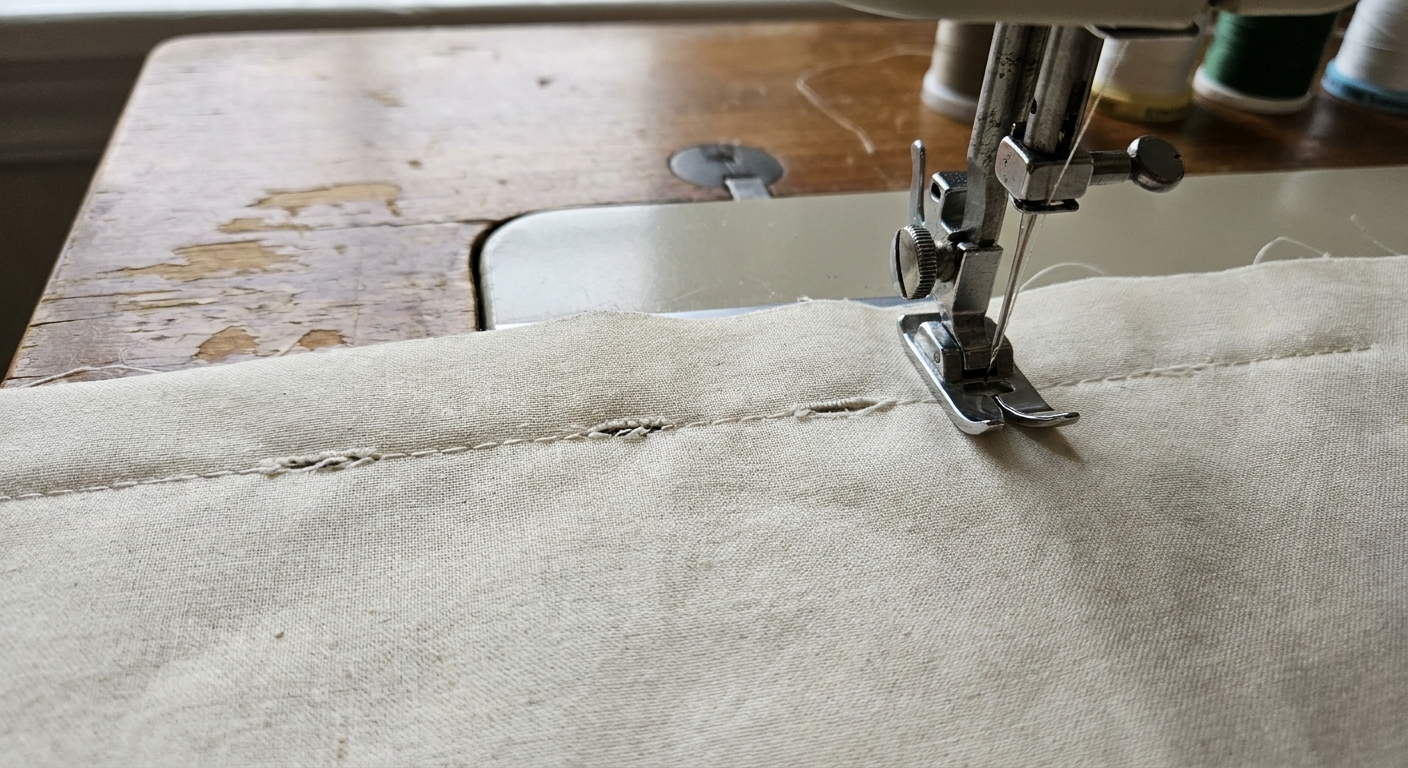
If your seam looks mostly fine but has little gaps where the stitches just… didn’t happen, your machine is likely skipping stitches. That means the needle goes down, but the top thread does not properly catch the bobbin thread to form a stitch every time.
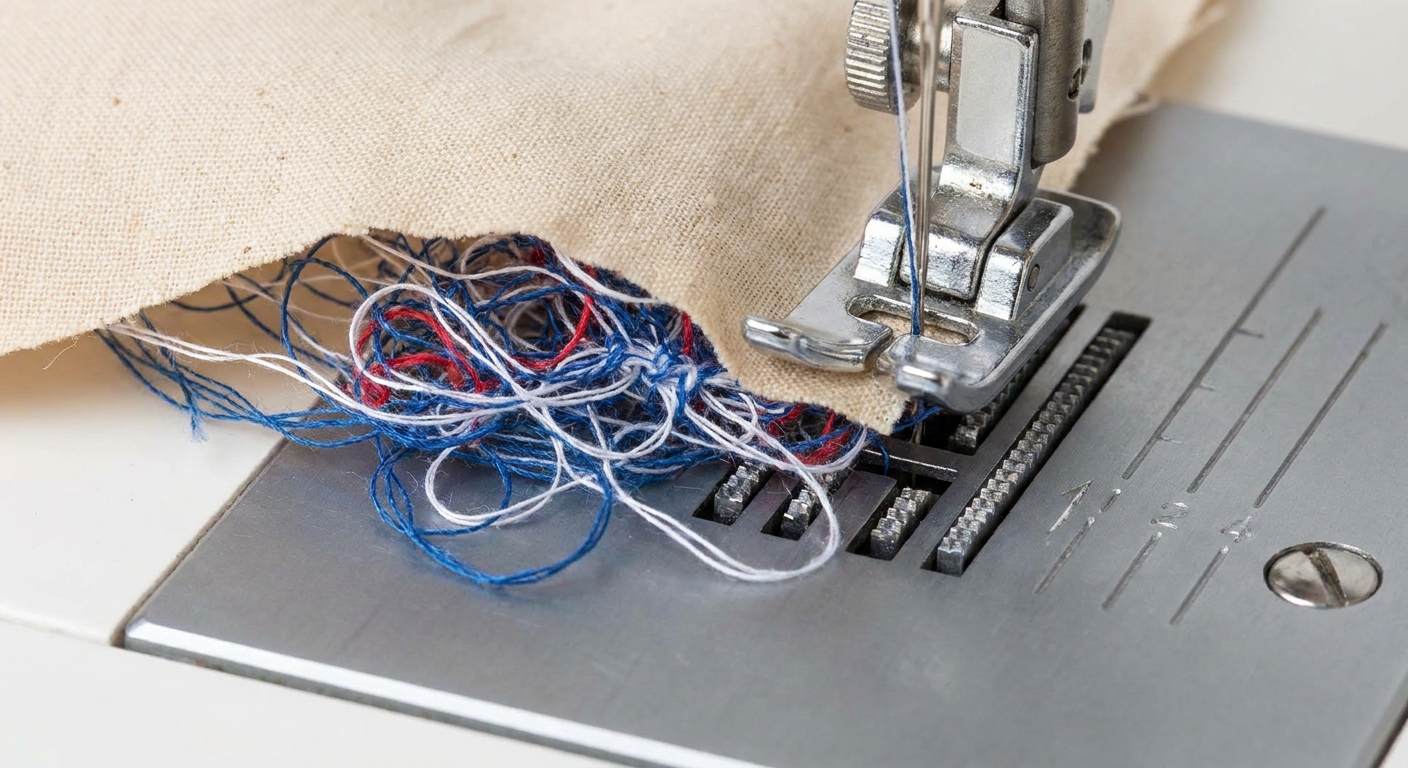
This is different from thread nesting (also called bird’s nests), where you get a snarl of thread under the fabric. Skipped stitches are usually a needle, threading, bobbin, feeding, or fabric setup issue, and you can often solve it with a calm, in-order checklist.
What skipped stitches look like
Skipped stitches show up as:
- Gaps in a straight stitch line
- Uneven stitch formation where one stitch looks longer than its neighbors
- Intermittent failure, often worse at higher speed or on thick spots like seams
- More skipping on zigzag than straight stitch, especially on knits
Because it comes and goes, it can feel mysterious. The good news is that the most common causes are very ordinary.
Before you troubleshoot: quick baseline
Skipped stitches can be caused by lint, and on some machines the bobbin area packs it in fast. Still, many times you can fix skipping with simple checks and a clean reset.
- Turn off the machine.
- Remove the needle and presser foot if you want more room to see.
- Brush lint from the bobbin area and feed dogs (no canned air if your manual warns against it).
- Put in a fresh needle (more on choosing the right one below).
- Rethread the machine with the presser foot up.
Now work through the causes in order.
Cause 1: Bent, dull, or wrong needle
If I could only check one thing for skipped stitches, it would be the needle. A tiny bend, a nick, or the wrong type can prevent the hook from catching the loop of top thread at the right moment.
How to tell
- Skipping started suddenly after a pin hit, a thick seam, or a “why did I do that” moment with denim.
- It skips more when you sew faster.
- It skips at seam intersections or over bulky layers.
Try this fix
- Install a new needle, not “the one that looks fine.”
- Match needle type to fabric:
- Universal: woven cottons, many general projects
- Microtex (sharp): tightly woven fabrics, precise topstitching
- Ballpoint or stretch: knits, jersey, swim, anything with spandex
- Jeans/denim: denim, canvas, heavy twill
Match needle size to thread and fabric weight too. Very fine fabric with a big needle or thick thread with a tiny needle can both cause trouble.
If you are using thicker thread (topstitch thread, upholstery thread, heavy polyester), consider a topstitch needle and sizing up. Thicker thread needs more room through the needle eye to form a clean loop.
Cause 2: Needle not fully seated
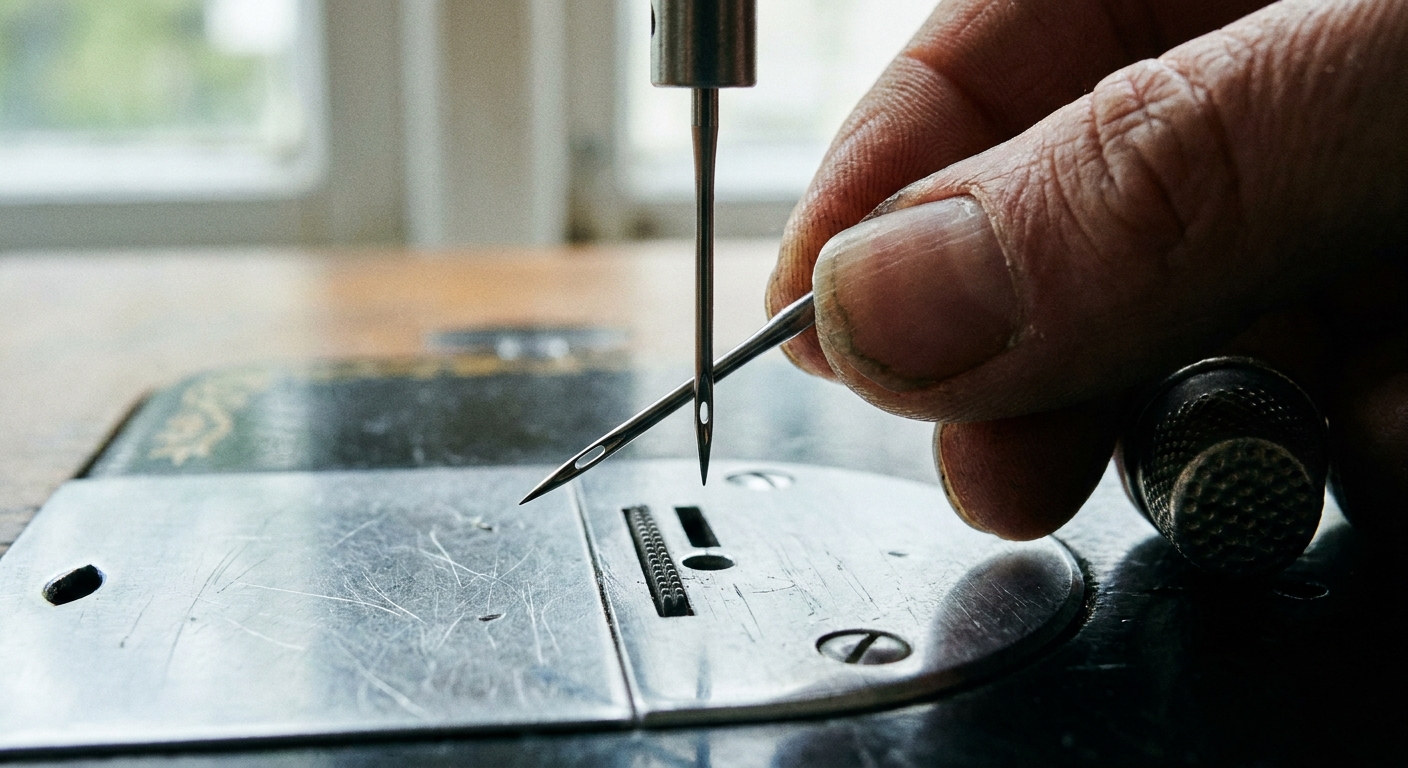
A needle has a right way around. If it is rotated wrong or not pushed up as far as it will go, the machine can miss the loop it needs to form stitches reliably. In plain language: the parts are meeting at the wrong place.
How to test
- Loosen the needle clamp screw.
- Push the needle all the way up into the needle bar.
- Orient it correctly for your machine (most home machines: flat side to the back, but always follow your manual).
- Tighten the clamp screw firmly.
If you are unsure about orientation, check your specific model’s manual. This one small detail causes a surprising amount of skipping.
Cause 3: Upper thread missed a guide
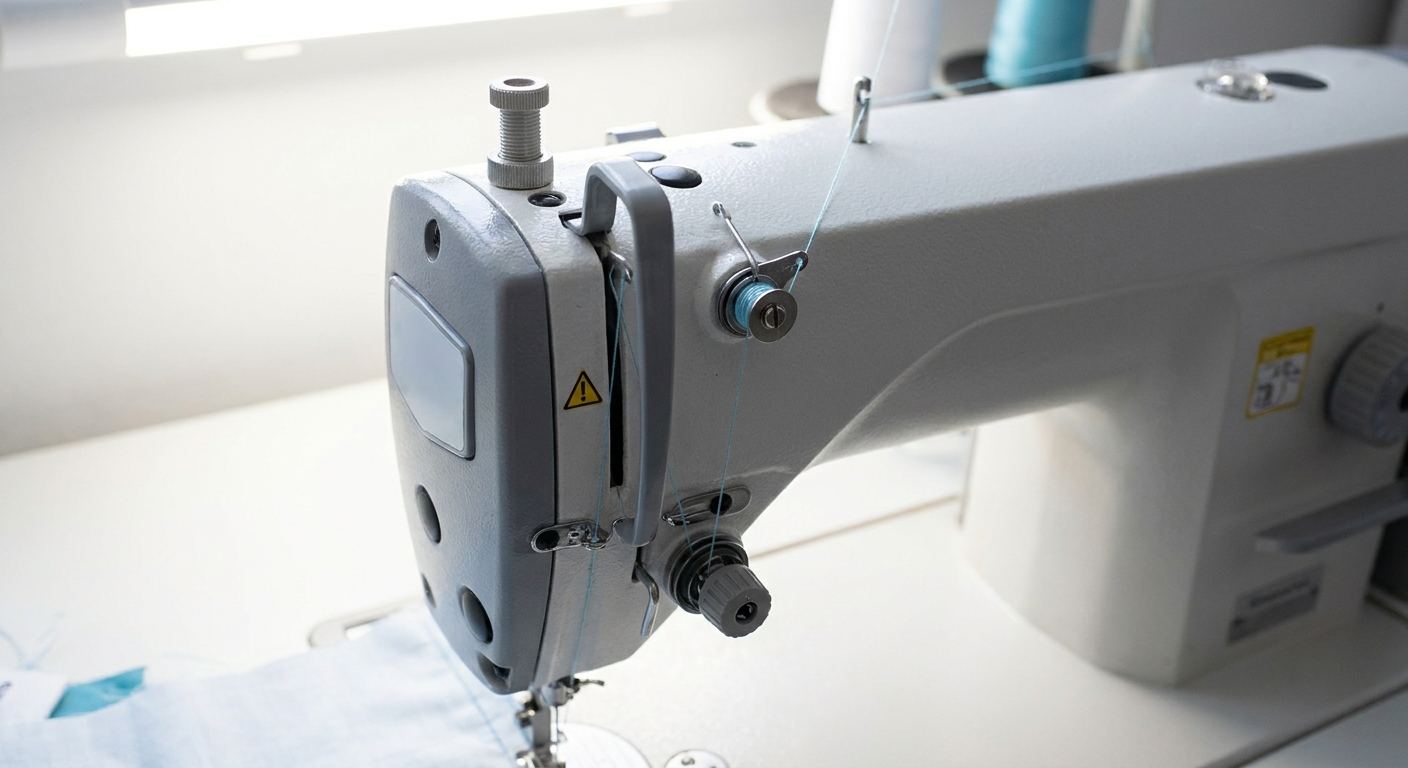
Skipped stitches are not always about tension, but incorrect upper threading can stop the machine from forming a consistent loop for the hook to catch. The classic culprit is threading with the presser foot down, which keeps the thread from seating properly in the tension discs.
How to test
- Raise the presser foot.
- Raise the needle to its highest position.
- Completely remove the top thread.
- Rethread slowly, hitting every guide, especially any tiny hook right above the needle.
Extra checks
- Make sure the thread is not snagging on the spool cap or spool notch.
- If your machine has a take-up lever, confirm the thread is actually in it.
- Use good-quality thread that is not fuzzy or old and brittle.
Cause 4: Bobbin issues
If the bobbin is lumpy, loosely wound, the wrong type, or not seated correctly, stitch formation can become inconsistent, especially at speed. Small bobbin problems can keep the machine from picking up the needle thread loop smoothly every time.
How to test
- Remove the bobbin and look at the wind. It should be smooth, firm, and level, not domed on one side.
- Try a different bobbin that you know is wound well.
- Confirm you are using the right bobbin type for your machine (size and style matter).
- Reinsert the bobbin in the correct direction for your model and make sure it clicks or seats fully.
- Make sure the bobbin thread is actually seated in the bobbin case tension spring or slot (that tiny “snap-in” point many of us miss when we are in a hurry).
What helps
- Wind bobbins at a steady, moderate speed.
- Guide the thread lightly as it winds so it lays evenly.
- If your bobbin thread path includes a tiny tension spring, be sure the thread is seated in it.
Cause 5: Pulling the fabric
This one is sneaky because it comes from being helpful. If you pull the fabric from the back or hold it too tightly in front, the needle can deflect slightly. That tiny deflection can be enough for the hook to miss the loop, which shows up as skipped stitches.
How to test
- Put your hands on the fabric to guide, not pull.
- Let the machine feed the fabric at its own pace.
- If you need help starting, hold thread tails for the first few stitches rather than tugging the fabric.
If you are sewing something tricky
- Use a walking foot if you have one, especially for quilts, knits, or sticky layers.
- Lengthen the stitch slightly for bulky seams.
- Use a hump jumper or a folded scrap of fabric behind the foot to level it over thick spots.
Cause 6: Presser foot pressure
If your machine lets you adjust presser foot pressure, it can matter more than you would think.
- Too much pressure can stretch knits as they feed, which can contribute to skipped stitches and wavy seams.
- Too little pressure can let fabric “float” and feed inconsistently, especially on slippery or very soft fabrics.
If skipping is mostly on knits, try lowering pressure a bit (small changes), use a stretch needle, and consider a walking foot.
Extra help for knits
Some knits are just bouncy little gremlins. If you have the right needle and it still skips on very stretchy jersey, try adding a bit of support.
- Sew with a strip of tissue paper, wash-away stabilizer, or tear-away stabilizer under the seam, then remove it after.
- Avoid stretching the fabric in front of the needle as you guide it.
How to test fixes on scrap
Every time you change one thing, test it on a scrap that matches your project as closely as you can.
My simple test routine
- Use two layers of the same fabric.
- Use the same needle and thread you plan to sew with.
- Sew a 6–10-inch straight line at a normal speed.
- Sew another line faster.
- If your project has bulk, fold the scrap to mimic the thickest seam and stitch across it.
If the skipping improves, you found your culprit. If nothing changes, move to the next cause on the list instead of adjusting five things at once.
When it may be timing
If you have done the needle, insertion, threading, bobbin, feeding, and pressure checks and you still get skipped stitches consistently, your machine may need service. The most common deeper issue is hook timing, meaning the hook and needle are no longer meeting at the right moment to form stitches reliably.
Signs it is time for a technician
- Skipping happens on most fabrics, even plain woven cotton with a fresh universal needle.
- The machine started skipping after the needle hit a pin, zipper, or thick seam and has never been the same.
- You hear a new clicking sound or feel resistance in the handwheel.
- It skips more and more over time no matter what you change.
At that point, stop sewing and avoid forcing the machine. If the needle struck something hard and you suspect timing, continuing can turn a small problem into an expensive one. A technician can check timing, hook condition, and feed system alignment safely.
Quick FAQ
Can wrong thread cause skipped stitches?
Yes. Very old, fuzzy, or inconsistent thread can fail to form a clean loop for the hook to catch. If you suspect thread, swap in a fresh spool of decent all-purpose polyester and retest.
Why does my machine skip stitches mostly on knits?
Knits often need a ballpoint or stretch needle. A universal needle can pierce and tug the fibers in a way that makes the loop harder to catch, especially on jersey with spandex. Also check presser foot pressure and consider a stabilizer strip if the fabric is very stretchy.
Why does it skip stitches only when I sew fast?
Speed exaggerates small problems like a slightly bent needle, missed thread guide, or uneven bobbin wind. Slow down, recheck the needle and threading, then test again.
Is skipping stitches the same as thread bunching underneath?
Nope. Bunching underneath is most commonly an upper threading or tension seating issue, but it can also come from bobbin-case threading mistakes, the wrong bobbin type, or thread snagging. Skipped stitches look like missing links in an otherwise normal seam.
Calm troubleshooting order
- Replace the needle with the correct type and size.
- Insert the needle correctly and fully.
- Rethread the upper thread with presser foot up.
- Swap to a smooth, evenly wound bobbin, confirm correct type, and seat the bobbin thread in the case spring or slot.
- Guide fabric gently and let the feed dogs do the work.
- Adjust presser foot pressure if your machine allows it, especially for knits.
- If it still skips, consider professional timing or service.
If you want, tell me what fabric you are sewing, what needle type and size you are using, and whether it skips on straight stitch, zigzag, or both. I will help you narrow it down, mouse-to-maker.