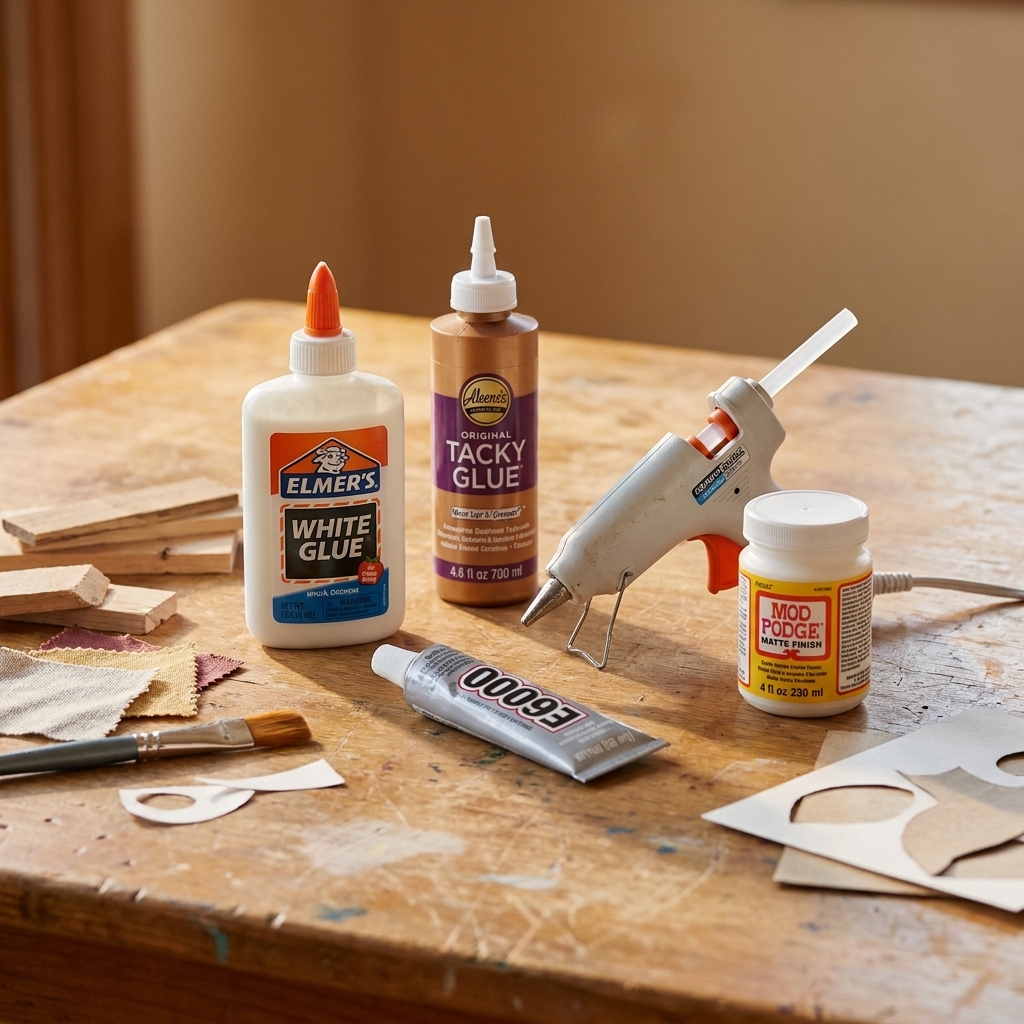
Stop guessing in the glue aisle. Here’s exactly when to use PVA, tacky glue, Mod Podge, super glue, E6000, epoxy, hot glue, spray adhesive, and more by mat...
If you have ever tried to assemble a large wreath frame, upholster a thrifted chair, or crank out dozens of craft-fair items with a bargain mini glue gun, you already know the pain points: weak heat, slow recovery, glue strings everywhere, and that one maddening drip that lands exactly where it should not.
Heavy-duty hot glue guns are a whole different world. The good ones heat fast, hold a steadier working temperature, and let you work for hours without hand cramps or glue chaos. This guide focuses on the industrial and serious-DIY tier: higher wattage, better insulation, more reliable feed, and features like adjustable temperature and drip-resistant nozzles that actually make a difference on big builds.
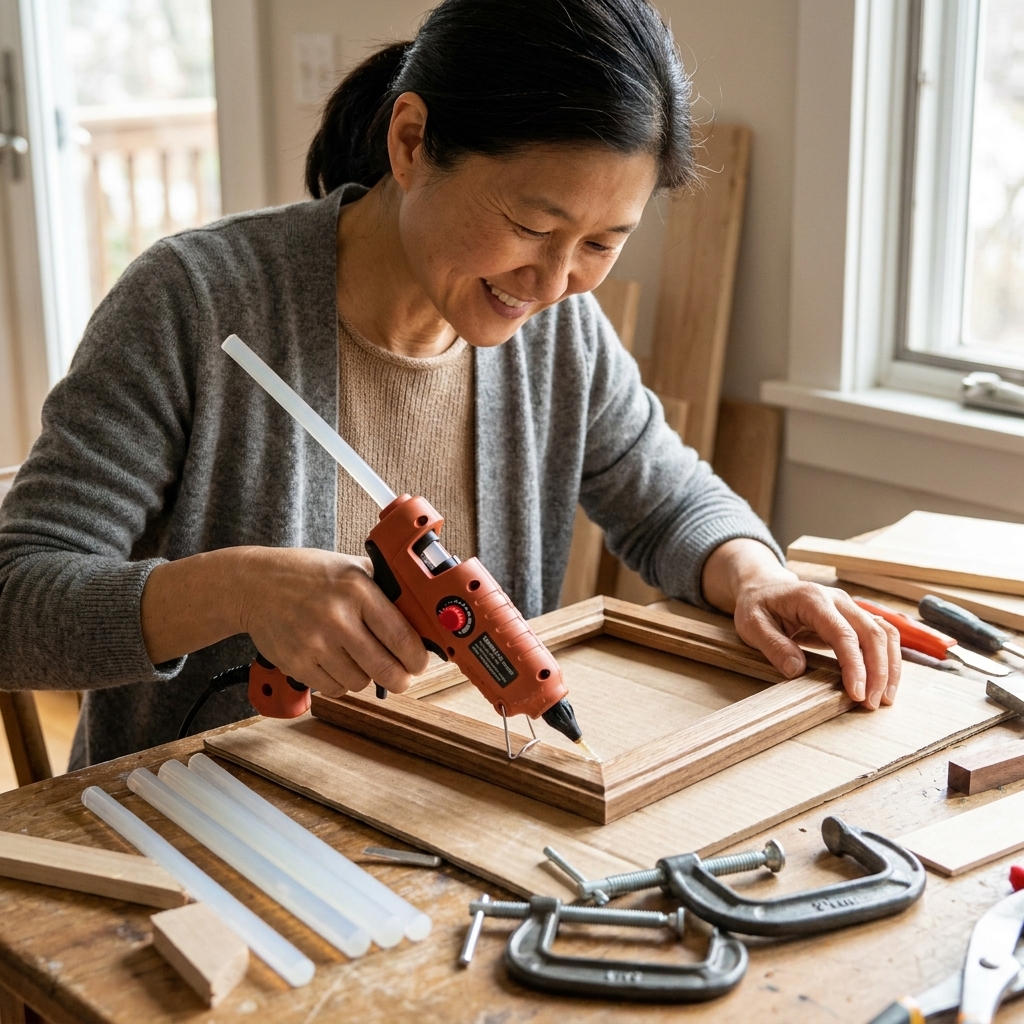
What makes a hot glue gun heavy-duty
Brands love the phrase heavy-duty, but for real-world crafting, it usually comes down to a few measurable things.
- Higher wattage and better heat recovery: For large projects, you need a gun that can melt glue continuously without cooling down every time you pull the trigger.
- Full-size glue sticks: Most heavy-duty models take 1/2 inch (approximately 11 mm) sticks, which feed more glue with less frequent reloading.
- Better temperature stability: Cheap guns run hot, then cool, then spike again. A steadier gun gives you more consistent open time and bond strength.
- More comfortable ergonomics: A smooth trigger, balanced weight, and a stable stand matter when you are gluing for 30 to 90 minutes at a stretch.
- Nozzle design that reduces dripping: No glue gun is truly drip-free (gravity is undefeated), but some nozzles, valves, and heat profiles drip far less.
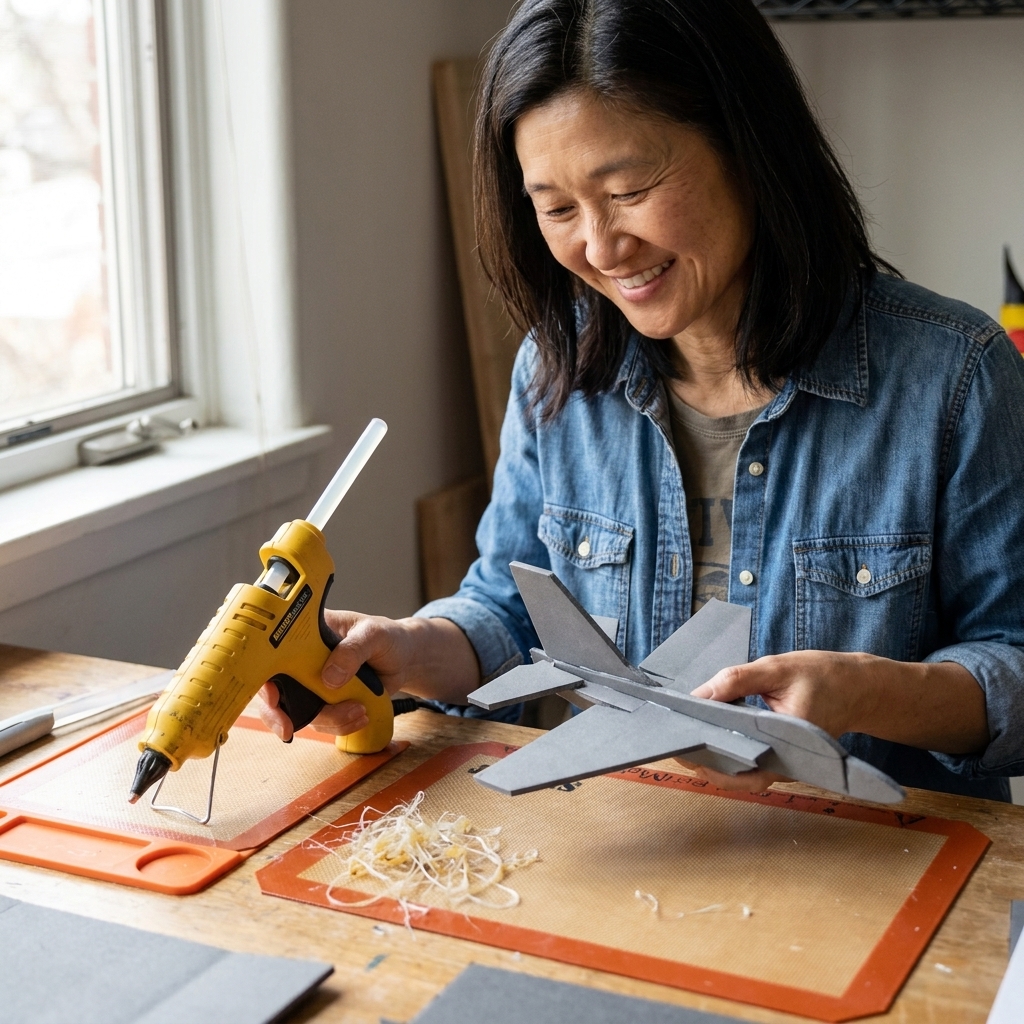
Start here: the features that matter
1) Temperature control
Dual-temperature guns give you two settings, typically a low setting for delicate materials and a high setting for heavier bonding. Adjustable-temperature guns let you dial in a range, which is a big deal for serious makers because different glue sticks behave better at different temperatures.
As a rule of thumb, common setpoints are often around:
- Low temp (often around 250 to 300°F / 120 to 150°C): Ribbon, lightweight faux florals, some plastics, delicate fabrics, thin foam, heat-sensitive surfaces.
- High temp (often around 380 to 400°F / 193 to 204°C): Wood, metal, ceramics, thicker plastics, heavy faux greenery stems, structural joints, fast production work.
- The adjustable-temp sweet spot: When you want a slightly cooler high-temp for less stringing, or a slightly hotter low-temp for better grab on tricky materials.
From experience: If you are getting lots of spiderweb strings, your glue can be too hot, your nozzle can be dirty, or you are pulling away too fast. On a truly adjustable gun, nudging the temp down a little (or turning the dial down one notch) can reduce stringing more than any magic technique.
Quick definitions: Open time is how long the glue stays workable before it skins over. Set time is how fast it grabs and holds in place. Both change with temperature, material, and glue-stick formula.
2) Wattage and heat recovery
Wattage is not everything, but it is a decent clue about how well the gun can keep up. Think of it as a proxy for output and recovery, not a guarantee of quality. For heavy-duty crafting, you will usually see models in the 60W to 220W neighborhood, depending on your use case and the tool design.
- 60W to 100W: Great for frequent crafting, home decor builds, and occasional batch making.
- 100W to 220W: Better for extended sessions, thicker glue output, and work that needs consistent heat with minimal pauses.
If you are constantly holding the trigger and your bead starts to look thin, lumpy, or semi-melted, you are experiencing poor recovery. That is a common reason people decide hot glue is not strong enough for big projects, even when the real issue is inconsistent melt and cooling.
3) Drip resistance
Manufacturers may say drip-free or anti-drip, but hot glue is melted plastic. If the nozzle stays hot and gravity can pull, some glue will move.
What you are actually shopping for is drip resistance:
- Tighter nozzle tolerances so glue does not ooze as easily
- Better internal valve action so glue does not keep flowing after you release the trigger
- Steadier temperature control so glue is not overheated into lava mode
- A stand that positions the nozzle correctly (if the gun tips forward, it will drip more)
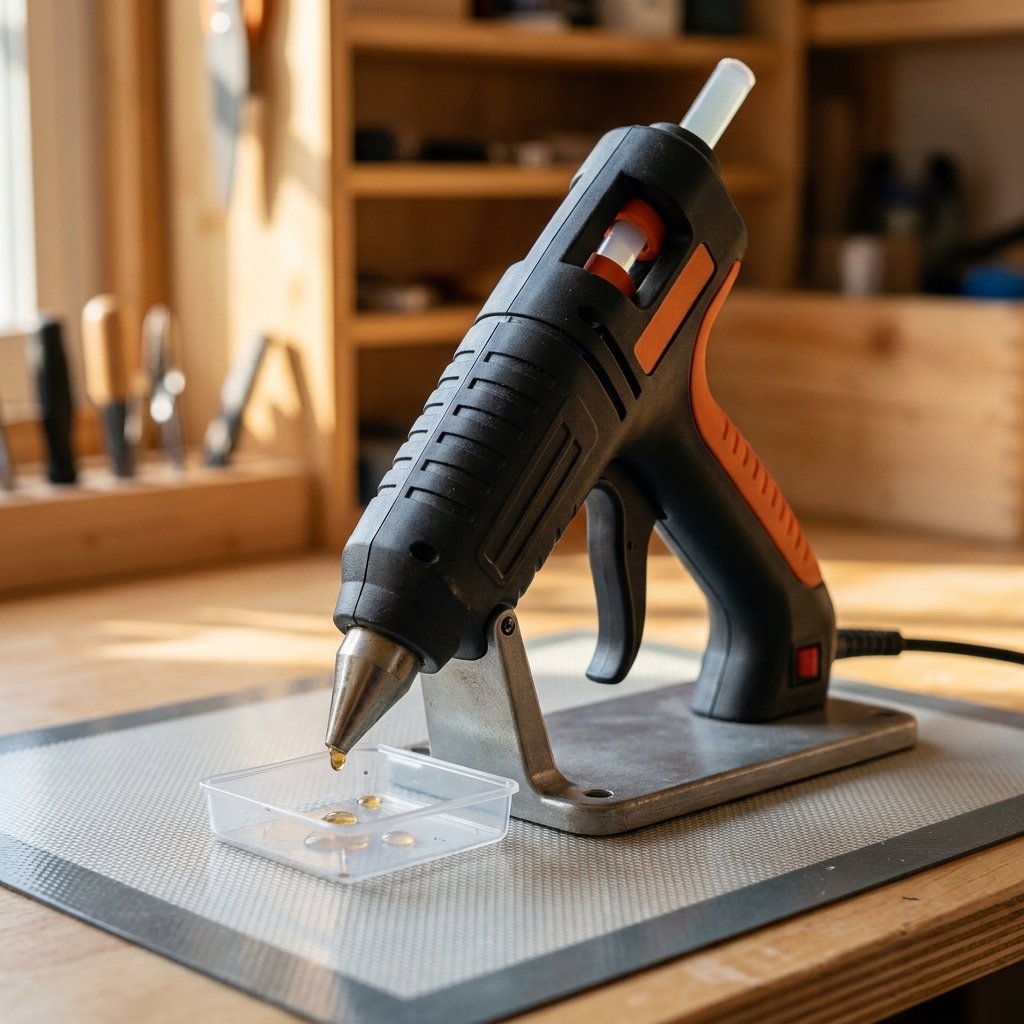
My practical trick: keep a little silicone cup liner or a folded scrap of cardboard under the nozzle while it rests. Even excellent guns will occasionally release a single dramatic drop at the worst possible time.
4) Nozzle shape and tip accessories
Nozzles are not one-size-fits-all. For large builds and cleaner results, look for:
- Interchangeable nozzles for fine lines vs thick beads
- Insulated nozzle covers for safety and better control
- Long nozzles if you often work in tight corners (think: shadow boxes or inside vases)
If you do a lot of detail work, a heavy-duty gun plus a fine nozzle can be the best of both worlds: strong heat recovery with neat application.
5) Feed system and trigger feel
For production crafting, the trigger matters as much as the temperature. A heavy-duty gun should have:
- Minimal wobble when you insert glue sticks
- Consistent resistance on the trigger pull
- Clean cut-off when you stop pulling, rather than a slow ooze
A crunchy, uneven trigger makes you over-squeeze, which creates glue floods and hand fatigue. If you have ever had a cramped hand after just a quick glue session, this is usually why.
6) Corded vs cordless
Corded heavy-duty glue guns still win for long sessions. They provide steady heat and, in many cases, are lighter than cordless models with big batteries.
Cordless can be wonderful for on-site work, quick repairs, or awkward areas where cords snag. The tradeoff is run time and sometimes less consistent heat output as the battery drains.
If you are doing large DIY builds at home, I recommend corded first, unless your workspace setup makes cords genuinely unsafe.
7) Safety features to look for
- Stand stability: A wide base beats a spindly wire stand every time.
- On/off switch: Helpful for stopping drips during pauses without yanking the plug.
- Insulated body: Keeps your grip area cooler.
- Auto shutoff: Nice peace of mind for busy homes, or if you craft while juggling kids and dinner.
Burn basics: The nozzle and the glue can cause real burns. If you get hot glue on your skin, get to cool running water, cool it down, and resist the urge to peel it off while it is still hot. If a burn is severe, blistering, or on a sensitive area, get medical advice.
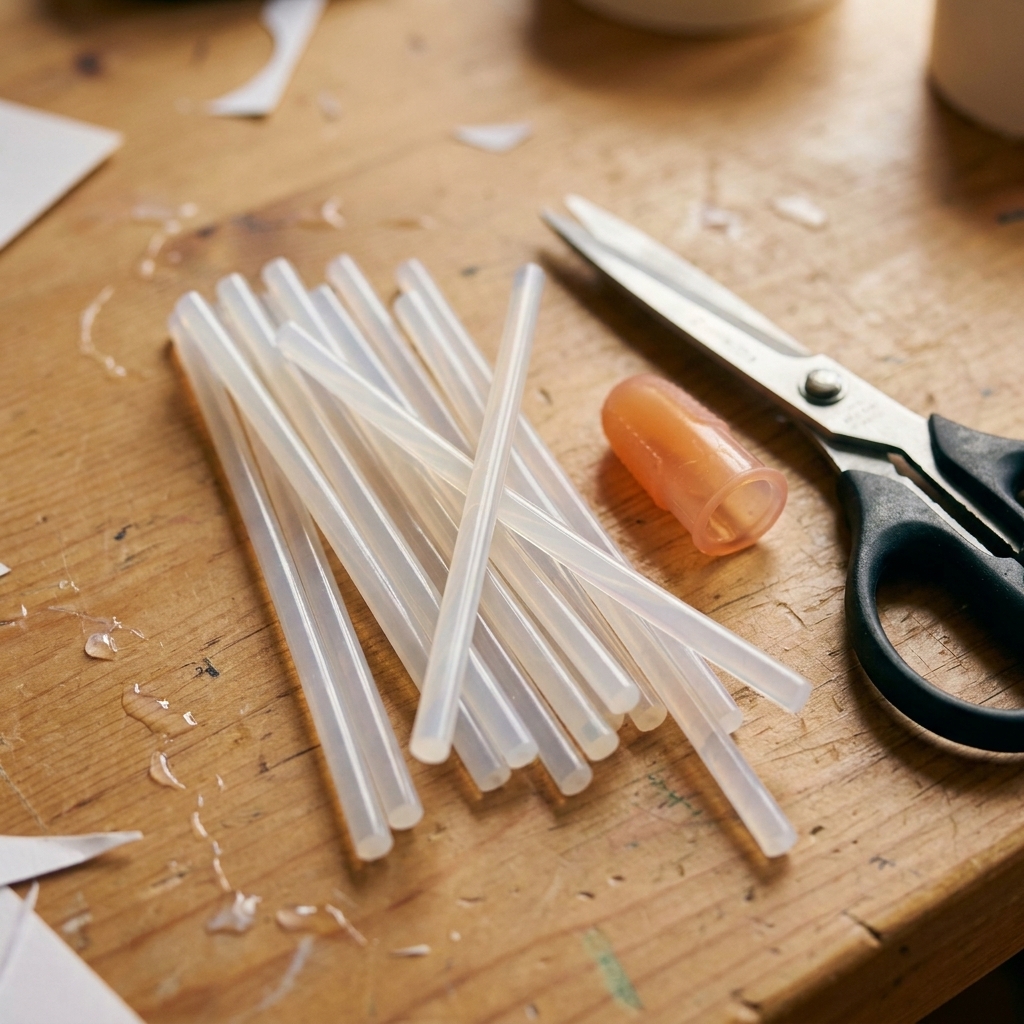
Choosing glue sticks
The glue gun is half the equation. The stick formula determines tack, flexibility, clarity, and how well it bonds to different materials.
Size and compatibility
Most heavy-duty guns use full-size 1/2 inch (about 11 mm) sticks. Some are designed for slightly different diameters (for example, 10 mm or 12 mm). Using the wrong diameter can cause feeding issues and extra dripping.
Before you hit buy, confirm the stick size in the manual or product specs, not just the headline.
High-temp vs low-temp sticks
- High-temp sticks: Stronger for wood, metal, ceramics, and structural craft builds.
- Low-temp sticks: Better for delicate materials and avoiding heat damage.
If your gun has adjustable temperature, you can often use either type, as long as you dial in a setting that melts and flows smoothly without scorching.
Glue chemistry (simple version)
Most craft sticks are EVA-based, which are easy to use and widely available. Some higher-performance sticks use polyamide or other specialty formulas designed for more heat resistance, flexibility, or better bonding on specific materials. The takeaway: if you keep having failures on the same material, it may not be your technique. Try a different stick formula.
Specialty sticks worth considering
- All-purpose clear: The everyday workhorse. Great for general DIY.
- Woodworking or construction formula: Often a bit tougher and less brittle when cooled.
- Flex or fabric-friendly: Stays slightly rubbery. Nice for costumes and wearables.
- Colored or glitter sticks: Fun for decor, but they can be stringier and sometimes less strong.
My no-waste habit: keep a jar of short glue-stick ends. When you are running low mid-project, you can feed a short end behind a fresh stick and keep going without tossing anything.
Heavy-duty gun types
Instead of throwing a confusing list of model numbers at you, here are the most common heavy-duty categories I recommend, plus what to look for in each.
Adjustable-temp pro craft guns
Best for: Makers who switch between materials, do detailed work, or sell items and want consistent results.
- Look for a temperature dial with a broad range (even if it is not degree-calibrated)
- Prioritize steady heat over the highest possible max temp
- Choose a model with a comfortable trigger for batch work
High-wattage industrial guns
Best for: Big decor builds, repeated long beads, heavy bonding, and high-volume crafting.
- Look for 100W+ and reviews that mention strong heat recovery
- A sturdy stand is non-negotiable here
- Consider interchangeable nozzles if you need precision sometimes
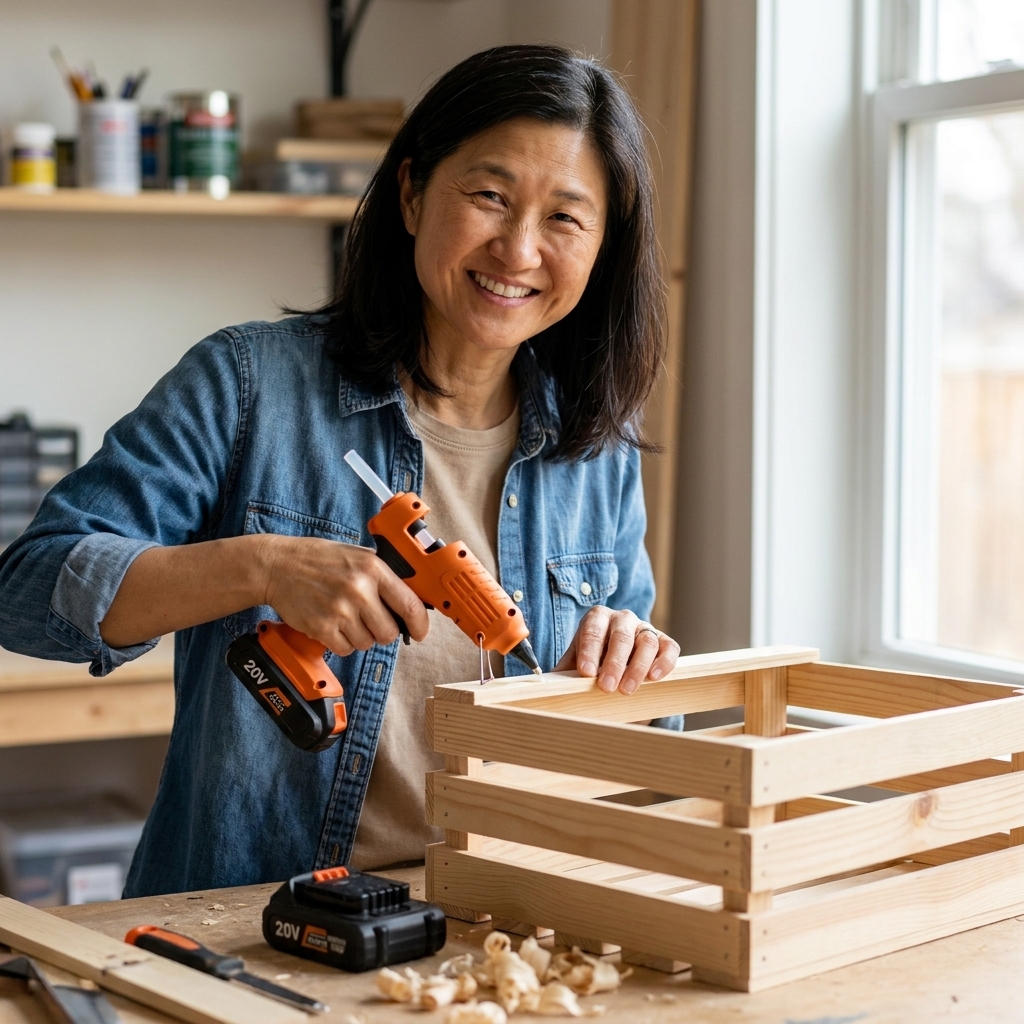
Battery-powered heavy-duty guns
Best for: On-site work, event setups, quick repairs, and awkward workspaces.
- Check run time and whether batteries are included
- Look for fast heat-up and an auto shutoff
- Plan a heat-safe resting spot since cordless guns do not always have the most stable stands
Pneumatic or bulk systems
Best for: Workshops, small manufacturing, or extreme volume crafting.
These can be amazing for output, but they are often overkill for home DIY. If you are considering one, double-check maintenance requirements, adhesive format, and replacement parts availability.
Before you buy: checklist
- Glue stick size: 11 mm (or your chosen size) and easy to find locally.
- Temperature: Dual-temp minimum for varied crafts; adjustable-temp for maximum control.
- Wattage: 60W+ for frequent DIY, 100W+ for long sessions and big builds (and check recovery reviews).
- Comfort: Soft grip, smooth trigger, and balanced weight.
- Stand and stability: Wide base or a well-designed kickstand.
- Drip behavior: Look for consistent mentions of low drip and clean shutoff.
- Replacement parts: Nozzles and stands should be available if this is a long-term tool.
- Safety: On/off switch, insulated nozzle cover, auto shutoff if you want peace of mind.
Match the tool to the project
If you want the easiest path to right tool, right job, match your glue gun features to what you actually make.
Large wreaths and holiday installs
- Go for: 60W to 100W, dual-temp or adjustable, stable stand
- Why: You need steady output for stems, picks, and thick beads without constant reheating
Wood crafts and home decor
- Go for: High-temp, strong wattage (80W+), good heat recovery
- Why: Wood pulls heat out of glue fast, which can shorten open time. Good recovery helps, but so does surface prep (light sanding) and using a glue stick formula that actually likes wood.
Costumes, EVA foam, and cosplay details
- Go for: Adjustable temperature, finer nozzle option
- Why: Foam can warp, and precision matters for clean seams and details
Batch-making to sell
- Go for: Adjustable temp, comfortable trigger, reliable feed
- Why: Consistency is everything when you are repeating the same steps 30 times
Tips for cleaner, stronger glue work
- Pre-fit everything: Dry-fit your pieces first so you are not fumbling while glue cools.
- Clean the nozzle regularly: Once cooled, peel away strings and buildup. A dirty nozzle encourages drips.
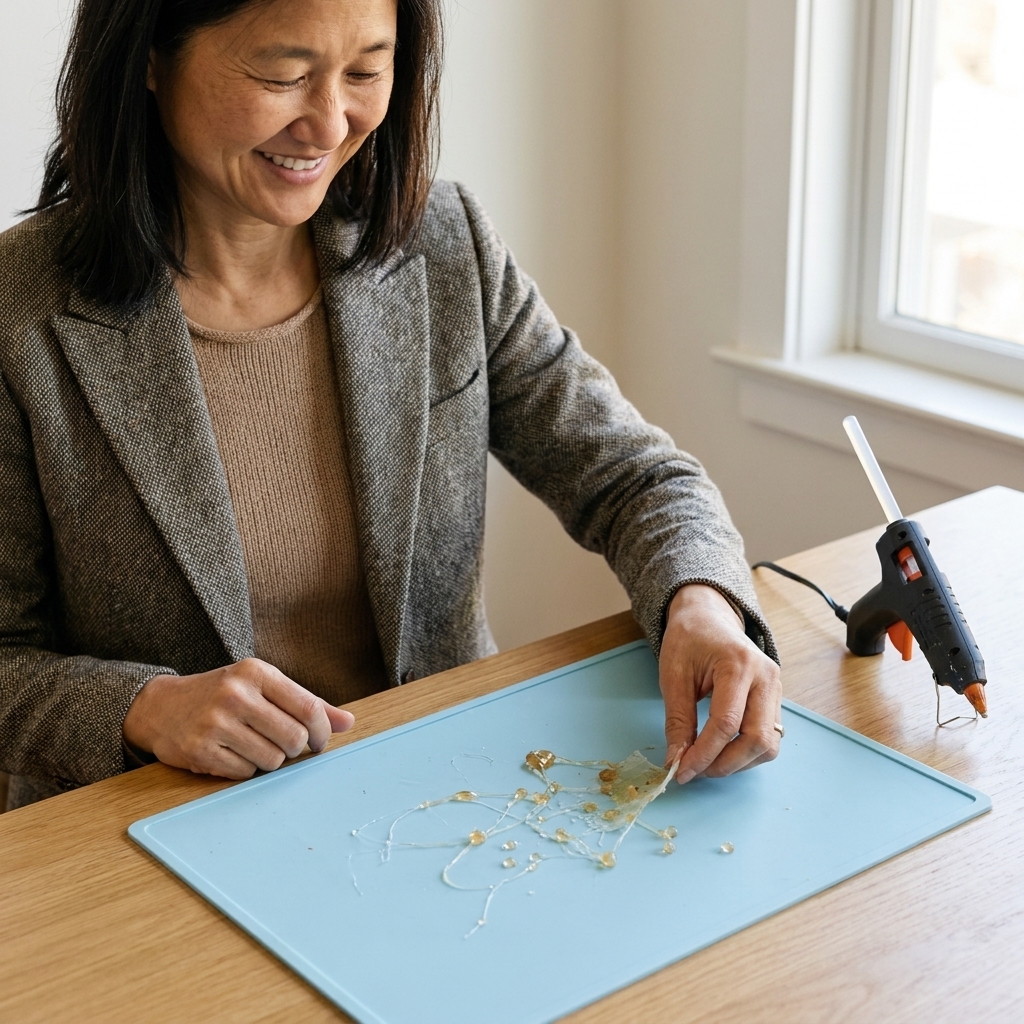
- Use a silicone mat: It turns oops moments into easy peel-ups.
- Rough up slick surfaces: Lightly sanding glossy plastic or metal gives glue more grip.
- Clamp when you can: Hot glue is fastest when it can cool undisturbed.
- Respect heat and sun: Hot glue can soften in hot cars, direct sunlight, or near heaters. Even high-temp sticks are not always the right call for outdoor or high-heat situations.
- Know when hot glue is not the hero: For outdoor, high-heat, or load-bearing situations, consider epoxy, construction adhesive, or mechanical fasteners.
FAQ
Is there a truly drip-free hot glue gun?
In real life, not completely. What you can get is significantly reduced dripping through better nozzle design, a tighter feed system, and steadier temperature control. Pair that with a silicone drip pad and you are in very sane, very livable territory.
Does adjustable temperature matter?
If you only glue one type of material, dual-temp can be enough. If you jump between wood, foam, fabric, and plastics, adjustable temperature is one of the best upgrades you can make. It helps reduce stringing, improves bond consistency, and lowers the risk of melting delicate materials.
What wattage is enough for big DIY?
For most serious home DIY, 60W to 100W is a solid range. If you do long, continuous beads and high-volume crafting, consider 100W+ for better heat recovery and less frustration. Just remember wattage is a clue, not the whole story, so scan reviews for recovery and temperature stability.
Can I use any brand of glue sticks?
You can mix brands, but you should match diameter and choose sticks made for your gun’s temperature range. If you notice clogs, excessive dripping, or weak bonds after switching brands, try a different formula or return to a stick that performed well.
How do I stop glue strings?
Try a slightly lower temperature, pause a beat before lifting the nozzle, and make a tiny wrap motion at the end of your bead. Also, keep the nozzle clean. Stringing is often a heat and residue problem, not a you problem.
What should I buy with a heavy-duty glue gun?
- Silicone craft mat
- Silicone finger caps or heat-resistant gloves
- A small metal stand tray or drip catcher
- Quality full-size glue sticks in a formula you trust
- Mini clamps or clothespins for holding pieces while cooling
The bottom line
A heavy-duty hot glue gun is one of those upgrades that makes crafting feel calmer. Look for stable temperature control, strong heat recovery, a comfortable trigger, and a nozzle design that behaves itself. Add the right glue sticks, prep your surfaces, and suddenly those big projects feel a lot more doable, even when your craft room is a little glittery and your plan is only 80 percent formed. That is the sweet spot, honestly.